
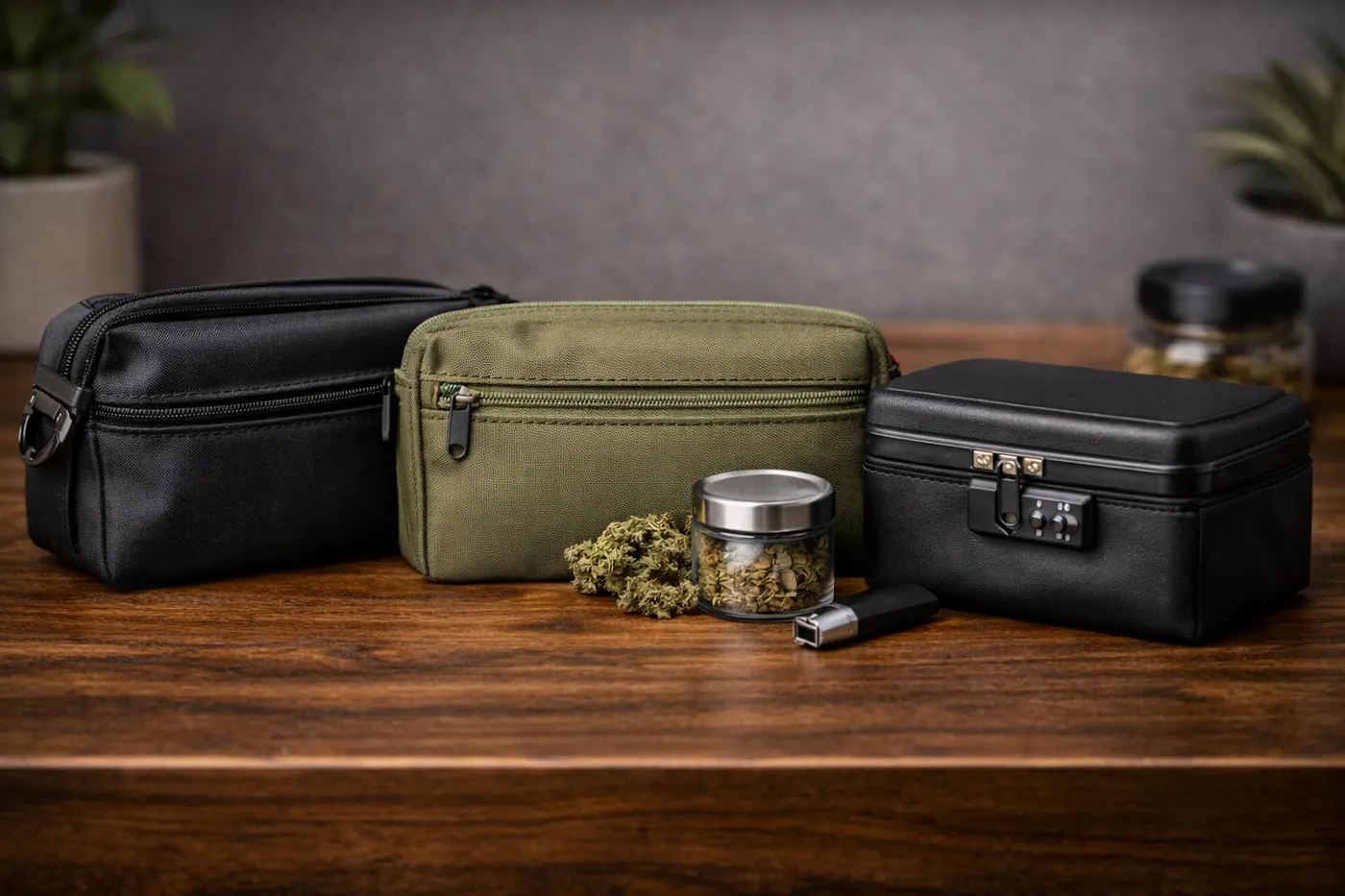
A smell-proof bag works when the whole design supports odor containment: lining, seams, zipper, size, and the way you actually use it. The bag is not magic. It is one layer in a cleaner setup.
Quick answer
The most important parts are the closure, seams, lining, and not overstuffing the bag. A smell-proof bag usually works best as the outer layer around a sealed container and clean tools, not as a messy pouch full of loose flower and dirty accessories.
The four things that matter most
| Feature | Why it matters | What can go wrong |
|---|---|---|
| Closure | The zipper or lid is the main leak point | Overpacking strains it or keeps it from closing fully |
| Seams | Odor control depends on the whole bag, not just the lining | Weak stitching and stress points age badly |
| Lining | Carbon or odor-focused layers can help absorb or contain smell | Dirty interiors and loose tools undermine the benefit |
| Size | The bag needs enough room to close without drama | Tiny bags get overloaded and stop being practical |
What owners usually notice first
People usually notice whether the zipper feels trustworthy and whether the bag has enough structure. A soft pouch can be great for a light kit, but if it collapses into a pile or has to be forced shut, it stops feeling discreet quickly.
What starts to annoy people later
The inside gets messy. Grinder dust, small tools, residue, and loose containers can make a smell-proof bag feel older than it is. The bag works better when flower lives in a sealed inner container and the bag carries the kit around it.
Why an inner container helps
A good airtight container handles the source. The smell-proof bag handles the outer layer. That combination is usually more reliable than asking one pouch to hold flower, grinder, lighter, tools, and cleaning bits loose. It also makes the bag easier to clean and less likely to hold stale odor inside.
If your setup includes flower storage, start with a real weed storage container, then add the bag if you need portability or discretion.
What is worth paying more for
- A smoother zipper: if the closure is annoying, you will not close it carefully every time.
- Enough structure: the bag should protect the container and tools instead of crushing them together.
- Cleanable interior: smell control is easier when the inside does not become sticky or dusty.
- Subtle design: the most discreet bag usually looks like normal gear storage.
Common questions
Do smell-proof bags actually work?
They can help a lot, but they work best when used correctly: closed fully, not overpacked, and paired with clean tools or sealed containers.
Is carbon lining enough?
No. Carbon lining can help, but the zipper, seams, size, and cleanliness of the bag matter too.
Should flower go loose in the bag?
No. Use a sealed container inside the bag. Loose flower or dirty tools make the bag harder to keep clean and more likely to disappoint.
Best next pages
Disclosure: This page may contain affiliate links, which means GreenGiggles may earn a commission if you buy through them, at no extra cost to you. As an Amazon Associate I earn from qualifying purchases.